
Urban Foraging: Hone Survival Skills, Save Money, Have Fun!
 Note: We may embed some sponsored links that can earn us a commission to defray operating costs for this website.
If grocery prices are giving you heart palpitations and the idea of growing a garden feels like a multi-year commitment you’re not spiritually ready for, here’s some good news: When you learn urban foraging, free food is already growing all around you.
On sidewalks. In parks. Behind parking lots.
Urban foraging may sound eccentric, but it is actually a practical, frugal, and surprisingly fun hobby. It also happens to be a survival skill you’ll be glad you practiced before you ever needed it.
Whether you’re a prepper, a frugal foodie, or a parent looking for a cheap weekend activity, this is one of the easiest skills to start.
What Is Urban Foraging?
Urban foraging is the practice of finding edible plants, berries, herbs, and fruit that grow naturally in cities and suburbs. Many cities use edible landscaping without thinking much about it—mulberries, blackberries, figs, rosemary, mint, even citrus.
Most of us walk right past it every day and never notice.
Urban foraging is free, fun for families, a great excuse to get sunshine, a low-pressure way to build survival skills, and a frugal hobby with real benefits. It feels like a mix of nature walk, treasure hunt, and budget-friendly adventure.
The Website That Makes It Easy
Visit: https://fallingfruit.org/
This website is essentially a searchable map of edible plants around the world. Type in your ZIP code, zoom in, and you’ll see icons showing where certain plants or fruit trees are located.
You might find mulberry trees along bike paths, blackberry brambles behind a library, or rosemary bushes lining a parking lot. This tool makes urban foraging accessible even for total beginners.
Use Google Lens to Identify Plants
Do not eat anything unless you are confident about what it is.
Google Lens can help you identify a plant:
- Open your camera.
- Tap the Lens icon.
- Point it at the plant.
- Review matching images and information.
It’s not perfect, but it’s a good first step. When in doubt, skip it.
Safety Tips for Urban Foraging
Urban areas come with extra considerations:
• Always wash anything you pick.
• Avoid plants near heavy traffic because pollutants settle on them.
• Be cautious of landscaping that appears sprayed or chemically treated.
• Do not trespass. Stick to public areas.
• When unsure of a plant’s identity, skip it.
These simple guidelines eliminate most risks.
Easy Beginner Plants to Forage
These are common, beginner-friendly, safe, and easy to recognize:
• Mulberries
• Blackberries
• Plantain (the weed, not the fruit)
• Mint
• Rosemary
• Prickly pear (pads and fruit)
These are widely used in landscaping and often grow with no assistance.
Make It a Family Activity
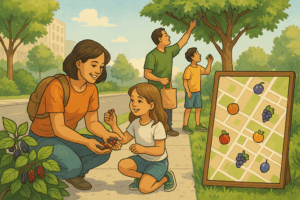
Urban foraging can be a great low-cost outing. Kids love it because it feels like a treasure hunt. Pick a few nearby locations on the Falling Fruit map, bring a couple of bags, and spend an hour exploring.
They’ll learn about plants, get sunshine, and discover the edible world hiding around them.
You may also be able to join local urban foraging clubs or attend a class that’s hosted by a local park. This gives you a chance to meet like-minded folks and build your skills and confidence.
Why Preppers Should Practice This Skill
Even if nothing ever goes wrong, urban foraging teaches:
• Local plant identification
• Seasonal awareness
• Where food sources exist in your area
• Confidence in gathering skills
If there’s ever a grid-down period, you won’t be learning for the first time under stress.
Final Thoughts
Urban foraging is frugal, fun, and practical. You don’t need special gear, books, or skills to start. Just a map, a phone, common sense, and curiosity.
It’s not about replacing your grocery store. It’s about building awareness, saving a little money, getting outside, and picking up a skill you may be grateful for someday.